
Cranes at sunrise © Pete Morris / Birdquest
The Oriental Bird Club is for birders and ornithologists around the world who are interested in birds of the Oriental region and their conservation
Over 300 Oriental bird species are considered by BirdLife International as threatened by forest destruction, wetland drainage, hunting and trade. Conservation of these species is often hampered by a lack of knowledge. Oriental Bird Club supports conservation work in the Oriental region by encouraging studies of birds and their habitats.
Through the generous support of members and corporate sponsors, the OBC conservation fund has supported hundreds of projects throughout Asia, primarily run by local people. More than £250,000 has been invested in conservation in the region since 1984. More information, including how to apply for a grant, can be found here.
LATEST NEWS


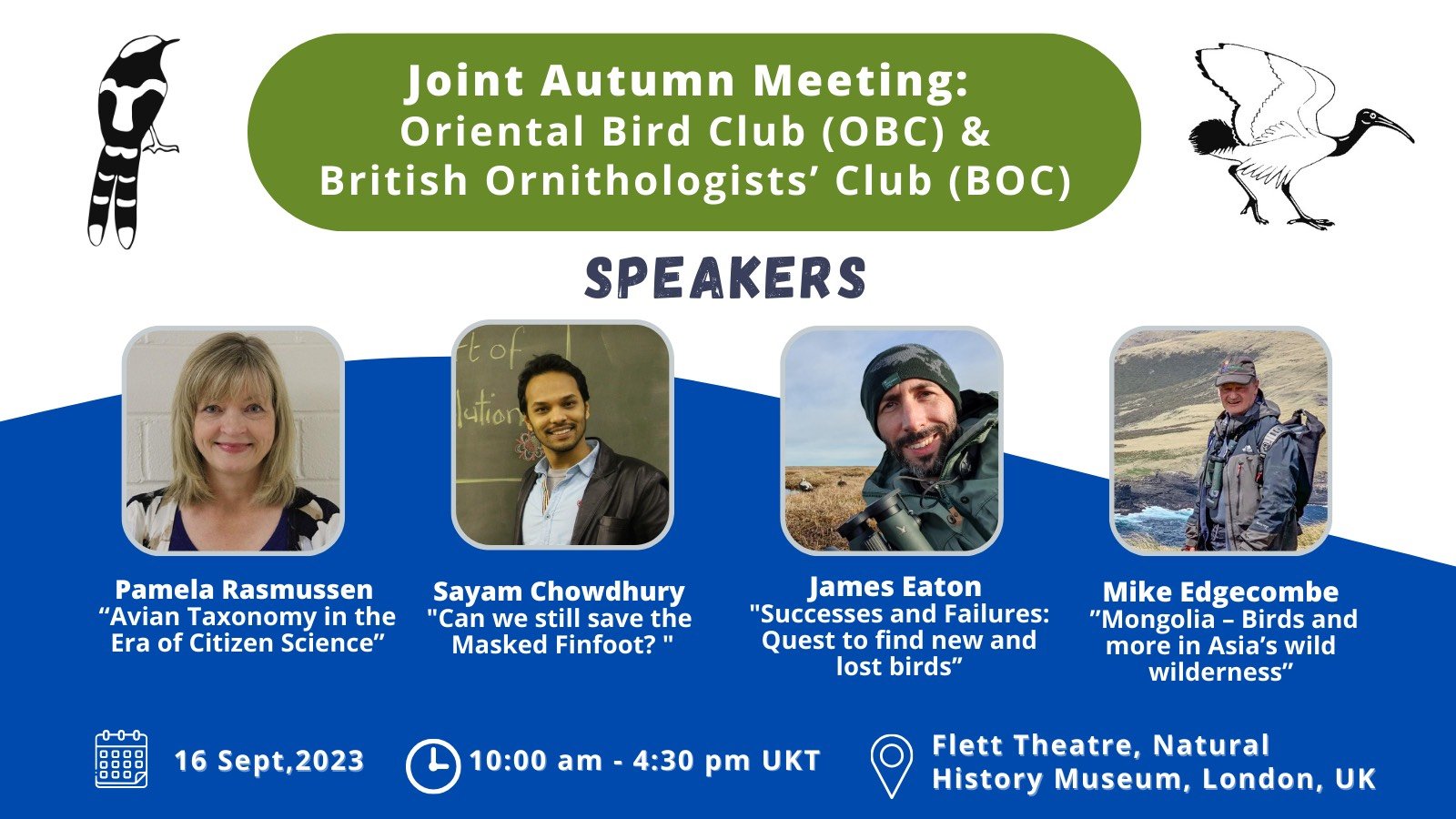
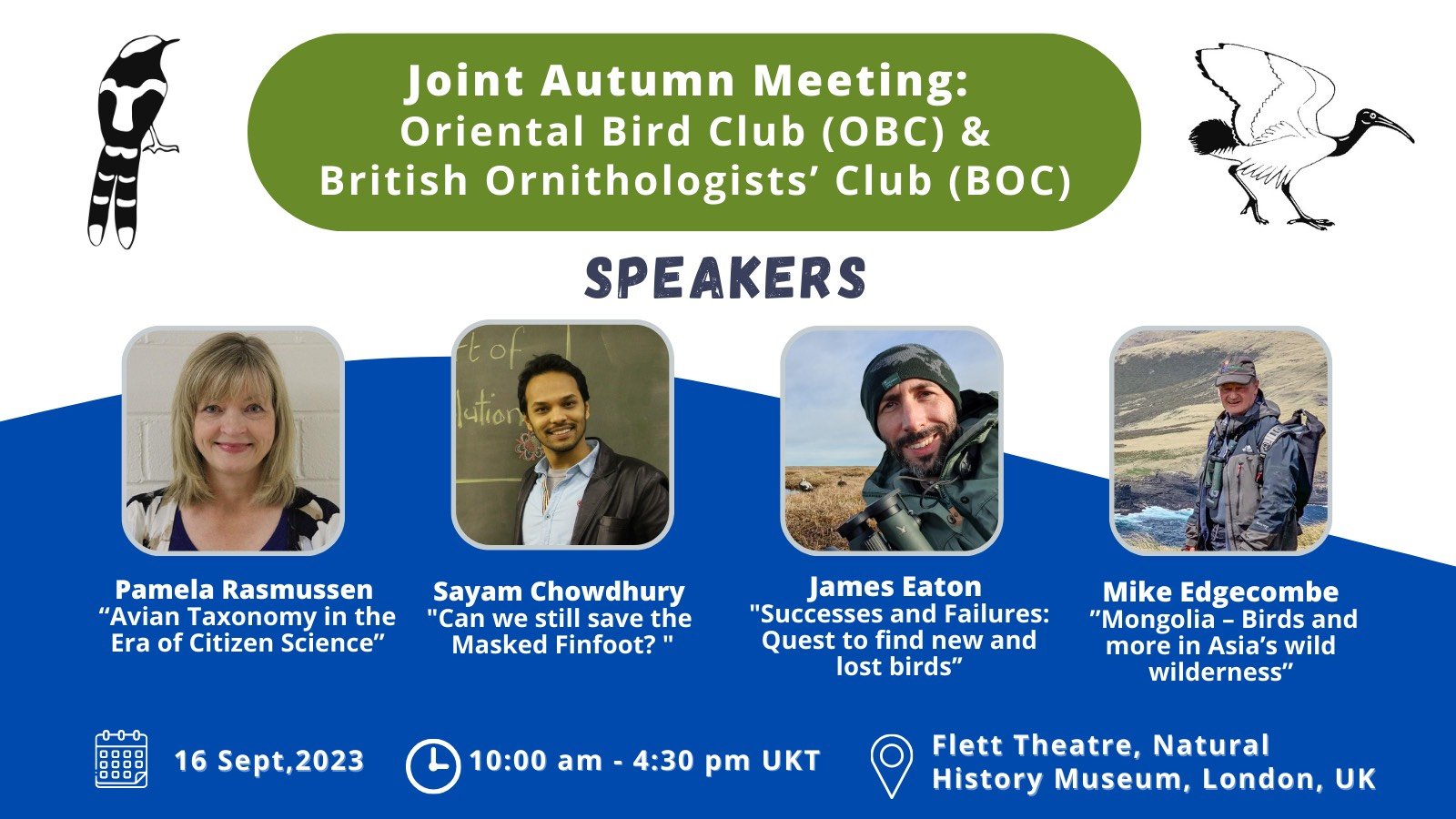

Missed the webinar on Nordmann’s Greenshank?
Don’t worry…here’s a recording

On 11th February 2023 the OBC hosted an online webinar entitled Knowing the Nordmann's Greenshank.
The speakers were Philipp Maleko of the Wildlife Conservation Society and Khwankhao Sinhaseni of the Bird Conservation Society of Thailand.
If you missed their presentations, you can watch them on YouTube by clicking the image above.
With a population of just over a thousand individuals, the Nordmann’s Greenshank is among the rarest of the world’s migratory birds. Little is known about its ecology although recent field studies are beginning to shed light into its unusual breeding habits—it is one of very few shorebirds that nests high in trees in the dense forests of the Russian Far East.

Give us a helping hand…
The Oriental Bird Club is entirely run by a team of dedicated volunteers—and we’re always looking for an extra pair of hands. Interested? To find out more, email mail@orientalbirdclub.org
About
Find out about our organisation, our methods, and our decades of conservation action.
Take Action
Ready to take the next step? You can become a contributor to our cause, or participate yourself.
Ambassadors for
Asia’s birds
Our corporate supporters
Gold sponsors





Silver sponsors



Bronze sponsors